
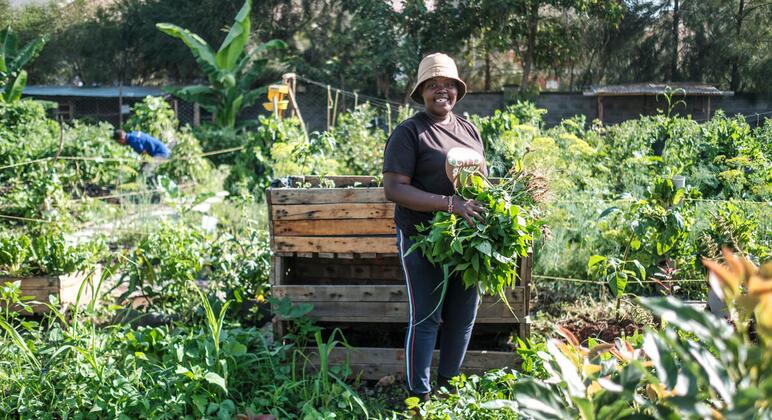
Kenya is intensifying its focus on land restoration and agricultural productivity through a series of new national initiatives aimed at bolstering climate resilience. Central to these efforts is the launch of the Kenya Soil Partnership and the national rollout of the Global Soil Doctors Programme. These initiatives, supported by the SoilFER programme, are designed to help farmers better understand soil composition, enabling more informed decisions regarding fertilizer application to improve crop yields in the face of intensifying climate shocks.
The agricultural sector remains a critical pillar of the Kenyan economy, with approximately 98% of the industry dependent on rainfall. Because droughts can cost the country an estimated 8% of its GDP every five years, the government is also prioritizing moisture retention in arid and semi-arid lands. The "Scaling Water Bunds for Climate Resilience Management" (SWaRM) project is currently active in Kajiado and Makueni counties, providing tools and evidence to inform policy decisions and land restoration efforts.
Beyond agricultural soil management, the government has secured a $160 million conservation finance agreement. This program aims to protect 173,000 square kilometers of natural environments. According to government officials, this model is intended to safeguard wildlife while simultaneously supporting the livelihoods of communities that share these landscapes. UN Environment Programme reports indicate that nature-based activities account for approximately 42% of Kenya’s GDP and 70% of national employment.
Despite these advancements, the implementation of climate policies has drawn scrutiny regarding social equity. A recent study published in the Environmental Law Review highlights a persistent gap between Kenya’s robust legal framework—which includes provisions for gender equity in the Climate Change Act—and the lived realities of women. Researchers note that women often bear a disproportionate burden of unpaid care work and climate-related stress, such as the collection of water and firewood. Experts argue that this lived experience constitutes critical expertise that should be more deeply integrated into climate financing and adaptation strategies.
The broader climate landscape in Kenya remains complex, characterized by both large-scale industrial projects and grassroots activism. While the government pursues international climate commitments, including a pledge to reduce greenhouse gas emissions by 35% by 2035, some youth activists and community members have expressed concerns regarding the impact of carbon markets and climate projects on Indigenous land rights. These groups emphasize the need for a "just transition" that prioritizes local community welfare and the phasing out of fossil fuel reliance.
As Kenya navigates these environmental and economic shifts, the government continues to balance industrial expansion with its conservation goals. Ongoing discussions among policymakers, researchers, and civil society reflect a growing emphasis on ensuring that national climate strategies are not only scientifically sound but also socially inclusive and protective of the natural ecosystems upon which the majority of the population depends.
Sources
- Kenya seals $160 million conservation finance deal
- Soil mapping aims to boost agricultural production in Kenya | UN News
- Just transition remains elusive for Kenyan women despite robust policies
- SWaRM: Scaling Water Bunds for Climate Resilience Management in Kenyan rainfed agri-food systems. - International Water Management Institute (IWMI)
- Kenyan youth activist Erica Njuguna: “Gen Z are uniquely impacted by climate crisis” - Amnesty International
Post a Comment