
As Kenya approaches the October–December rainy season, residents and agricultural communities are bracing for the impact of forecasted heavy rainfall. The Kenya Meteorological Service Authority has issued warnings of a super El Niño event, with projections indicating that November will mark the peak of the season. These forecasts have caused significant concern among vulnerable populations, particularly those living in flood-prone areas.
In Nairobi, residents of informal settlements along the Mathare River are recalling the losses sustained during the 2024 floods. Many families, who previously lost their belongings and homes to rising waters, are now preparing for the potential of further displacement. The recurring nature of these floods has forced some residents to relocate to higher ground in an effort to mitigate future risks.
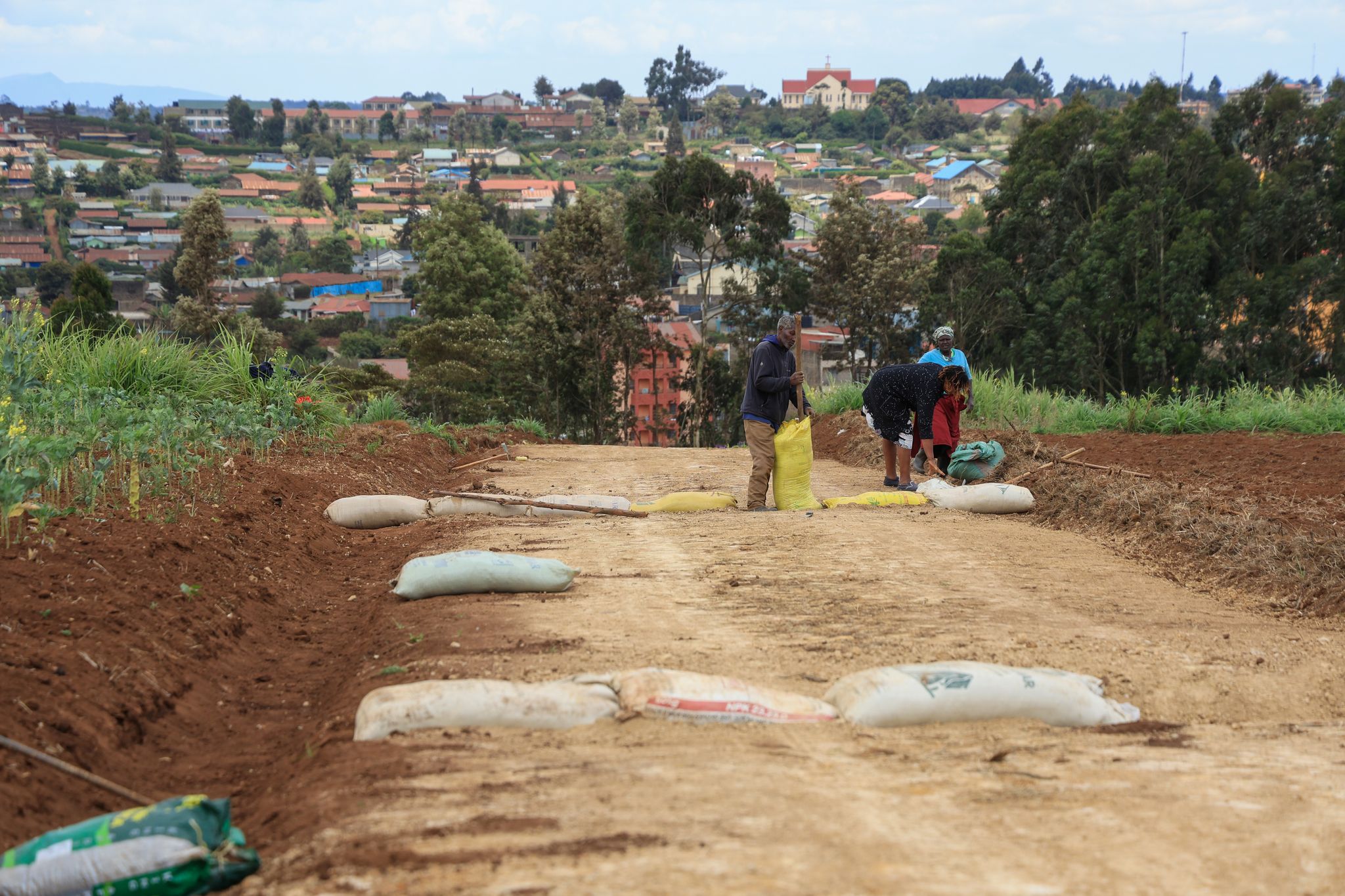
In rural areas, farmers are taking proactive measures to protect their livelihoods from the anticipated downpours. In Limuru, Kiambu County, agricultural producers are implementing new soil conservation techniques to prevent the erosion of nutrient-rich topsoil, a problem that caused significant crop destruction and financial losses during the 2024 rains. Farmers are utilizing methods such as filling sacks with sand to slow rainwater runoff and stabilize sloped land. These efforts are critical for protecting staple crops, including kale, spinach, cabbage, and potatoes, which are essential to local food security.
While communities focus on climate adaptation, other regions are navigating conflicts related to land use and industrial activity. In Ramula, Siaya County, residents are currently engaged in a legal dispute involving a gold mining company. Local community members and legal representatives have raised concerns regarding the enforcement of court orders related to land rights. The dispute centers on allegations of coercion and the process by which prospecting licenses were issued. Residents are calling for the protection of private property rights and are advocating for the ability of local artisanal miners to continue their operations without interference.
On a broader scale, Kenya continues to participate in international climate frameworks. The country has signed bilateral cooperation agreements under Article 6 of the Paris Agreement with several nations, including Singapore, Switzerland, and Norway. These agreements are designed to facilitate international cooperation in reducing greenhouse gas emissions through the transfer of carbon credits, supporting Kenya’s ongoing efforts to integrate climate strategy into its national development agenda.
As the country faces the dual challenges of preparing for severe weather events and managing industrial land-use concerns, the focus remains on balancing environmental resilience with the protection of community interests and agricultural productivity.
Sources
- Kenyan farmers adopt new techniques to curb erosion during heavy rains - Greenwich Time
- Kenyans brace for heavy El Niño rains as flood survivors recall their losses - Greenwich Time
- Kenyan farmers adopt new techniques to curb erosion during heavy rains - AP News
- European country agrees to pay Morocco for 8.78 million tonnes of emission cuts over 10 years as North African country races to expand renewable energy capacity by 2 GW - Business Insider Africa
- 𝗥𝗲𝘀𝗶𝗱𝗲𝗻𝘁𝘀 𝘁𝗵𝗿𝗲𝗮𝘁𝗲𝗻 𝘁𝗼 𝘀𝘂𝗲 𝘀𝗲𝗰𝘂𝗿𝗶𝘁𝘆 𝗼𝗳𝗳𝗶𝗰𝗶𝗮𝗹𝘀, 𝗺𝗶𝗻𝗶𝗻𝗴 𝗳𝗶𝗿𝗺 𝗼𝘃𝗲𝗿 𝗰𝗼𝘂𝗿𝘁 𝗼𝗿𝗱𝗲𝗿 Residents of Ramula in Siaya are threatening to file Contempt of court application against government officials and directors of a gold mining comp - Facebook
Post a Comment