
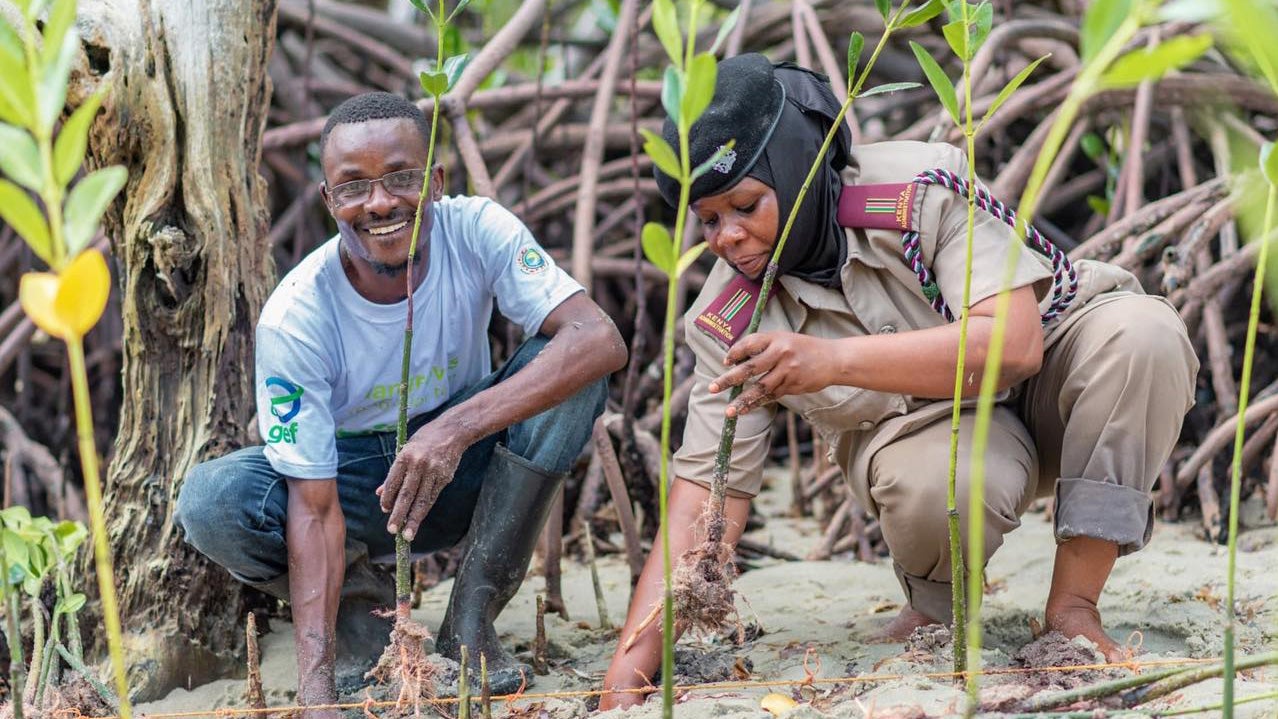
Young people in Kenya are increasingly positioning themselves at the forefront of environmental conservation and national policy discussions. A significant development in this sector is the work of the Kenyan Youth Biodiversity Network (KYBN), which has emerged as a key player in ecological restoration. Established in 2017 as the local chapter of the Global Youth Biodiversity Network, the organization now comprises over 1,200 members and 45 grassroots groups.
The network has focused its efforts on the country’s marine, wetland, and forest ecosystems. In Kwale County, the group has successfully transformed a stretch of degraded coastline into a thriving mangrove forest. By planting seedlings by hand, the youth-led initiative has helped mitigate coastal erosion and restore essential breeding grounds for fish, providing a direct boost to the livelihoods of local fishing communities. Beyond physical restoration, the KYBN has secured a formal role in the revision of Kenya’s National Biodiversity Strategy and Action Plan, contributing to the development of indicators used to track youth contributions to national environmental goals.
While youth-led initiatives are making strides in environmental sectors, the broader landscape of youth political and civic engagement remains a subject of active debate. Questions have emerged regarding the extent to which young leaders are effectively shaping national policy versus filling representative quotas within political parties. This discourse coincides with a period of heightened civic activity, as young people across East Africa, including Kenya, have increasingly organized to demand systemic changes.
The formal mechanisms for youth representation are also undergoing shifts. Recently, the 2026 national youth council elections were stayed, pausing the process for selecting new leadership for the body. This development occurs against a backdrop of ongoing national discussions regarding the role of youth in governance and the challenges they face in navigating the current political and economic environment.
As these diverse movements continue to evolve, the intersection of grassroots environmental action and national policy participation remains a defining feature of the current youth landscape in Kenya. Whether through the restoration of coastal ecosystems or participation in civic and political processes, young Kenyans are continuing to assert their influence on the country’s development trajectory.
Post a Comment